Sourcing plant-based bakuchiol is not just a price comparison. For skincare brands, the decision begins with knowing what is in the drum, where the botanical material came from, and how consistently it is processed. A polished sales sheet helps, but it is not enough. Ask suppliers for the botanical identity, country of origin, extraction method, batch-specific certificate of analysis, and information on residual solvents and contaminants. Then compare documents with a retained sample. Small differences in color or odor may matter during formulation.
The ingredient is often positioned as a botanical retinol alternative, but that does not make it interchangeable with retinoids. Product claims should reflect available evidence and the finished formula, not marketing shorthand. Search phrases such as “Plant Retinol Bakuchiol Bak” may appear in supplier or buyer research, yet brands still need clear ingredient specifications and careful review of the intended use. Check stability data, storage guidance, packaging compatibility, and whether the supplier can support traceability across repeat orders. Ask practical questions. Who tests each batch? How are changes in source material handled? What happens when a lot falls outside specification? These details can reveal more than a brochure. I would not treat one successful sample as proof of long-term consistency; that is an easy mistake. Reliable sourcing takes time, and some uncertainty remains until the ingredient performs in the actual formula. A disciplined review helps brands make a better-informed choice without promising results the evidence cannot support.
Bakuchiol is a plant-derived compound commonly obtained from the seeds of Psoralea corylifolia. Some botanical references use the name Cullen corylifolium, so both names may appear in supplier documents. Names can drift. For skincare sourcing, ask for the accepted botanical name, plant part, country of origin, and harvest details—not just “natural bakuchiol” on a specification sheet.
A credible identity check combines documented sourcing with analytical testing. Request a batch-specific certificate of analysis and a chromatographic profile showing bakuchiol content. The method and reference standard matter; a single percentage cannot describe an extract’s full composition. Ask whether testing screens for related furocoumarins, including psoralen, and request the actual results and laboratory method. This is easy to overlook when comparing suppliers.
Traceability should connect the finished ingredient to its botanical material and extraction process. Review records for species verification, processing aids, residual solvents, and batch consistency. DNA testing may support raw-material identification, but it is less informative after extensive extraction. That distinction deserves attention. Even a well-documented source can vary with harvest conditions, and paperwork alone does not prove identity. Compare representative batches and retain samples for independent review before approving a material for formulation.

Plant-based bakuchiol is commonly sourced from the seeds of Psoralea corylifolia, also called Cullen corylifolium. Ask suppliers to identify the botanical species and document the growing or collection region. A country name alone is thin evidence. Request lot-level records linking harvested material to the finished ingredient, and confirm which plant part was used. Seed-derived extract is not automatically the same as seed oil; the distinction matters when reviewing composition and processing.
Extraction details deserve equal attention. Ask whether the seeds are cleaned, milled, extracted with a solvent, and further purified, then request information on residual solvents and batch testing. A certificate of analysis should identify the tested batch and show how bakuchiol content was measured. Independent analytical testing can strengthen confidence, though no single document proves every aspect of quality. Look for controls addressing contaminants and consistency between lots. Details vary.
There can be gaps. Records may name a region without identifying the farm or harvest conditions, so ask what is verified and what is simply reported. A clear answer is more useful than a polished claim. Check that the supplier’s botanical name, plant part, extraction description, and test results refer to the same ingredient and batch.
Trace botanical origin, seed-part use, and extraction method.
Request details for the botanical identity (species, growing region, and harvest lot), plant part (confirm seeds), and extraction method (solvent or process, key conditions, and purification). Bakuchiol is associated with seeds of Psoralea corylifolia (syn. Cullen corylifolium). Bars count suggested traceability fields—not measured supplier or market data.
When sourcing plant-based bakuchiol, ask for batch-specific documentation, not a generic sample report. A cosmetic-grade COA should identify the lot, test date, analytical method, result, units, and acceptance limits. HPLC data can help assess bakuchiol content and reveal related peaks. Ask whether the method uses a reference standard and whether the chromatogram is available. A single purity figure, without context, is hard to evaluate.
Tips: Match the COA lot number to the container. Check that results are reported clearly, not just marked “pass.”
HPLC supports quality review, but it does not prove botanical origin or cover every safety concern. Request information on the plant source, extraction, and storage conditions as well.
Review whether the supplier’s specifications fit your intended formulation, and consider independent testing when risk or volume warrants it. Paperwork can look reassuring. It still deserves a careful read. Even a small mismatch in lot codes or units should be clarified before approving a material.
For skincare brands, a clinical benchmark can make sourcing decisions more grounded. One study examined a 0.5% bakuchiol formulation over 12 weeks in 44 participants. Treat those details as a reference point, not a guarantee that every ingredient or finished product will perform the same way. Formulation matters.
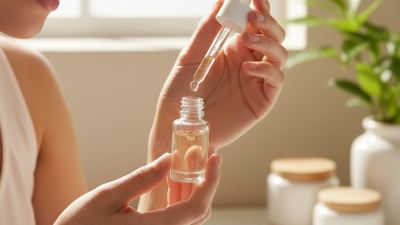
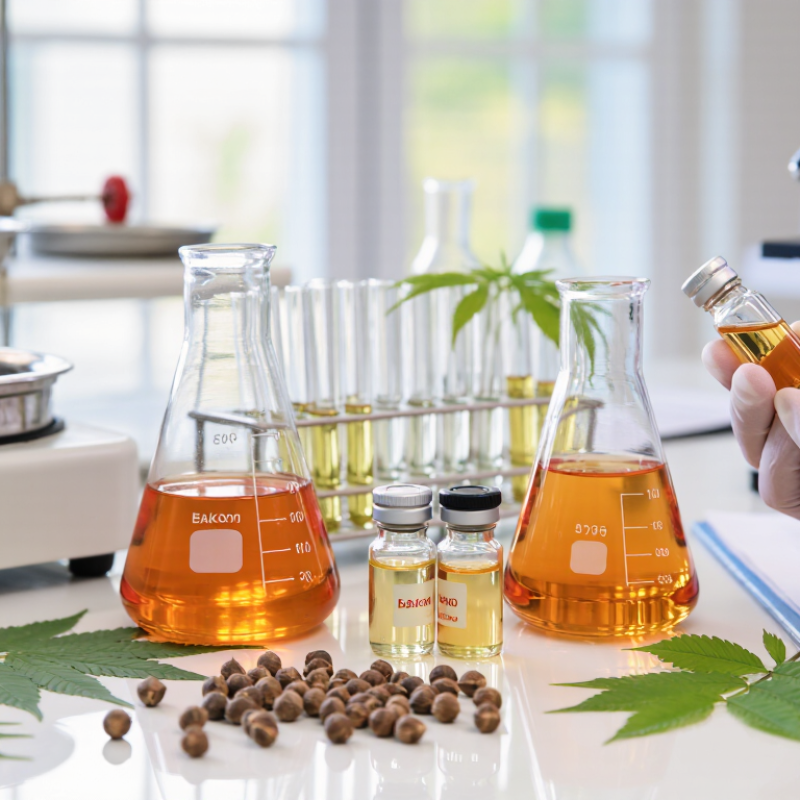
Ask suppliers for the botanical source, extraction details, identity testing, and batch-specific certificates of analysis. Check that the assay confirms bakuchiol content, rather than relying only on a general botanical description. Request information on contaminants, storage conditions, and stability. Small details count. A pale, consistent oil in a sample vial is useful to inspect, but appearance alone cannot verify purity or potency.
The benchmark also gives teams a practical question: does the product being developed match the tested concentration and use period? If not, avoid implying that the study directly supports its claims. Keep records of supplier lots and finished-product testing, and review the evidence with a qualified safety or clinical professional. One limitation remains: a study with 44 participants over 12 weeks cannot answer every question about long-term use or every skin type. That should shape both sourcing and communication.
| Sourcing or evidence dimension | Information and practical consideration | How to use this when evaluating a raw material |
|---|---|---|
| Botanical identity | Bakuchiol is a plant-derived meroterpene phenol associated with the seeds of Cullen corylifolium, also known by the botanical synonym Psoralea corylifolia. | Request the botanical name, plant part, country of origin, and traceability documentation. Confirm that the supplied material is identified as bakuchiol rather than assuming all “babchi” extracts have the same composition. |
| Ingredient identity and composition | Bakuchiol is a defined constituent; a whole-plant or seed extract is a mixture and is not automatically equivalent to purified bakuchiol. | Ask for an analytical identity and assay specification, the test method, representative certificate of analysis, and details of any carrier or diluent. Set acceptance limits based on the intended formula and applicable regulations. |
| Clinical benchmark | A randomized, double-blind, 12-week study included 44 participants and evaluated a topical formulation containing 0.5% bakuchiol, used twice daily, against 0.5% retinol used once daily. | Use 0.5% as a study-specific reference point for evidence review—not as a universal optimal concentration, guaranteed outcome, or substitute for finished-product testing. |
| Reported study outcomes | Both study groups showed improvements in wrinkle measures and hyperpigmentation over the study period. The authors reported no statistically significant difference between the groups for these outcomes; the retinol group reported more scaling and stinging. | Keep claims tied to the studied formulation, use schedule, population, and duration. Do not assume the same results or tolerability for a different supplier’s ingredient or finished product. |
| Extraction and processing | Extraction method, purification, and processing can affect the characteristics of a botanical ingredient. A botanical source alone does not establish a particular purity, solvent profile, or environmental impact. | Request a process summary, residual-solvent information where relevant, impurity controls, and supporting sustainability documentation. Verify claims against supplier records and the applicable testing requirements. |
| Quality and safety documentation | Identity, assay, contaminants, microbiological quality, and stability are material-specific quality considerations; requirements depend on the ingredient, intended use, and market. | Review current specifications and batch documentation, including appropriate tests for heavy metals, residual solvents, pesticides, and microbial limits. Confirm that methods and limits are suitable for the product and jurisdiction. |
| Formulation compatibility | Performance and stability depend on the complete formulation, packaging, storage, and use conditions—not only the ingredient’s botanical origin. | Evaluate solubility and compatibility in the intended base, then conduct finished-formula stability, packaging compatibility, and safety assessments before making product claims. |
| Evidence reference | Dhaliwal S. et al. “Prospective, randomized, double-blind assessment of topical bakuchiol and retinol for facial photoageing.” British Journal of Dermatology. 2019;180(2):289–296. doi:10.1111/bjd.16918. | Consult the full publication when developing substantiated claims. The trial provides evidence for the formulations and conditions studied, not for every bakuchiol raw material or finished product. |
Qualify suppliers by checking where the botanical comes from, which plant part is used, and how bakuchiol is extracted. Ask for batch-level traceability linking the raw plant material to the finished ingredient. A clear chain of custody matters. Compare supplier records with the certificate of analysis, including identity, purity, and test methods. If a document lists only a broad region, request more detail before making origin claims.
Sustainability needs evidence, not just reassuring language. Request information on cultivation or wild harvesting, resource use, and measures to protect local ecosystems. Check whether claims apply to the ingredient itself or only to one step in production. Regulatory files should fit your intended sales markets and product use. Ask for current safety data, contaminant testing, and relevant technical documents, then have qualified regulatory staff review them. No single file guarantees compliance.
Tips: Request a recent sample and matching batch documents. Compare the label, lot number, and test results. Follow up on gaps. Supplier records can be imperfect; that is a reason to clarify, not to assume the worst. Keep written answers with your qualification file, and reassess when the source or process changes.