Leave Your Message
Global buyers need more than a polished product page when choosing a Bakuchiol Oil manufacturer. They need clear ingredient information, consistent production, and answers that hold up under practical review. Bakuchiol is commonly used in cosmetic formulations, but the finished oil can differ by source, concentration, carrier ingredients, and processing method. Those details affect how buyers assess a product for their own needs.
This guide introduces ten manufacturers for buyers comparing suppliers across international markets. It considers factors such as product range, manufacturing capabilities, quality documentation, customization, and communication. Ask for current specifications, certificates, and batch-related records where relevant, then verify that the documents match the product being offered. Small details count. A delayed reply or unclear ingredient list may reveal a real sourcing problem. It is also wise to discuss sample availability, packaging options, minimum order quantities, and shipping terms before making a decision. Requirements vary by destination and intended use, so buyers should confirm applicable rules with qualified local advisers.
No ranking can replace direct supplier checks. Company information can change, and public claims may not tell the full story. Some comparisons will remain imperfect. That is worth admitting. Use the list as a starting point, ask specific questions, and assess each manufacturer against your own quality and commercial requirements.
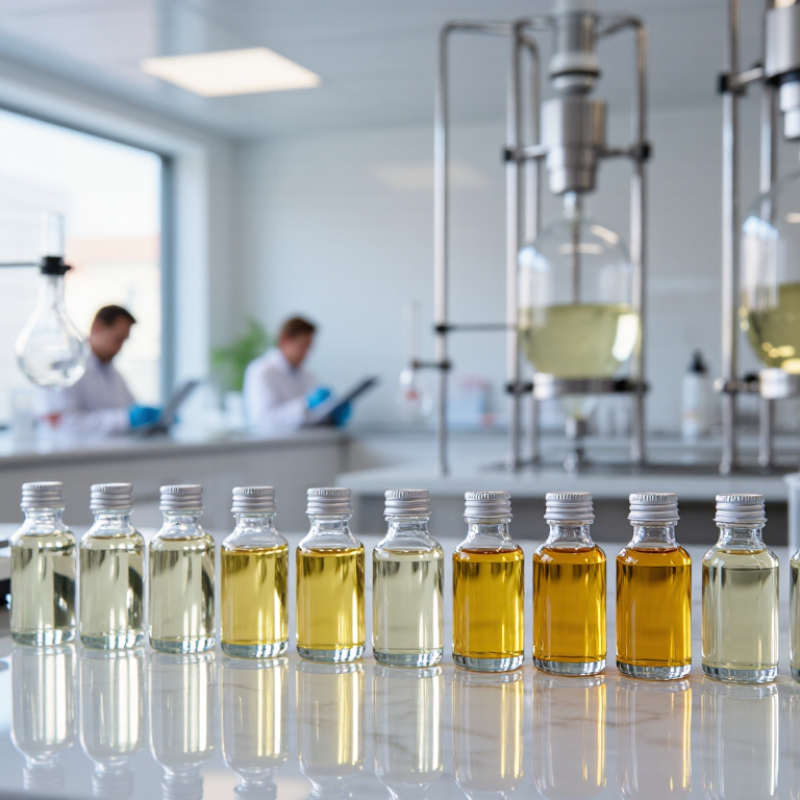
Bakuchiol is a phenolic meroterpene found in the seeds of Cullen corylifolium, formerly known as Psoralea corylifolia. The plant belongs to the legume family. In a raw-material specification, the botanical name and plant part matter: a seed extract is not automatically equivalent to purified bakuchiol. Extraction and refining can change the levels of accompanying plant compounds. Small detail, big difference.
Buyers typically encounter three ingredient forms: purified bakuchiol, standardized seed extract, and oil-based blends. Some suppliers also offer encapsulated formats. These forms differ in concentration, carrier oils, and handling needs, so compare the assay method and active-content specification—not just the ingredient name. Bakuchiol dissolves in oils, making the finished formula’s texture and stability practical checks. A clear sample helps. It is not proof of purity.
Clinical evidence is promising, but limited. Dhaliwal et al. reported a 12-week study of 44 participants comparing 0.5% bakuchiol twice daily with 0.5% retinol once daily (British Journal of Dermatology, 2019). Both groups showed improvements in wrinkles and pigmentation; the study also reported more scaling and stinging with retinol. The sample was small. I would not treat one trial as a guarantee for every extract, formula, or skin type. When evaluating suppliers, request batch-specific assay data and identity testing alongside the botanical source.
A technical comparison guide for evaluating bakuchiol ingredient suppliers. The entries below describe ingredient characteristics and buyer checks, not ranked or named manufacturers. Specifications vary by supplier, extraction process, and formulation.
| No. | Comparison Dimension | Technical Information | What Global Buyers Should Verify |
|---|---|---|---|
| 1 | Botanical source | Bakuchiol is a naturally occurring plant-derived compound associated with Psoralea corylifolia L., also known by the accepted botanical synonym Cullen corylifolium. | Request the botanical name, plant-part declaration, country of origin, and traceability documents for the supplied material. |
| 2 | Plant part | Seeds are a commonly reported raw-material source for commercial bakuchiol extraction. The plant itself contains other constituents, so a crude botanical extract is not necessarily equivalent to purified bakuchiol. | Confirm whether the ingredient is seed-derived, a whole extract, or a purified component, and check that the specification matches the product description. |
| 3 | Principal active compound | Bakuchiol is a distinct meroterpene phenol. It is not a retinoid and should not be described as retinol or as a vitamin A derivative. | Check the ingredient identity and assay results; avoid relying only on a marketing description such as “plant retinol.” |
| 4 | Other botanical constituents | Unrefined extracts may contain additional plant constituents, and their profiles can vary with raw material and processing. These co-extractives are not automatically part of a purified bakuchiol specification. | Request a composition statement and relevant impurity or residual-constituent limits where applicable to the intended market and use. |
| 5 | Ingredient form | Commercial offerings may include a bakuchiol-rich oil or extract, a more highly purified bakuchiol ingredient, or a formulated oil blend. These forms differ in composition and handling. | Determine whether the quoted material is a neat ingredient, botanical extract, or finished blend, and review the full composition and carrier information. |
| 6 | Oil solubility and formulation | Bakuchiol is generally used in oil-based cosmetic formulations. A supplier’s premixed oil product may include carrier oils or other formulation ingredients. | Ask for the recommended incorporation method, compatibility guidance, and a complete ingredient declaration for any premix. |
| 7 | Assay and identity testing | Bakuchiol content should be supported by a defined analytical method. Chromatographic methods such as HPLC or UPLC may be used for identity and assay, subject to the supplier’s validated method. | Request a lot-specific certificate of analysis, the test method, the assay basis, and acceptance limits. Compare results on a like-for-like basis. |
| 8 | Extraction and purification | Extraction and purification processes vary by producer. Process choice can affect the ingredient’s purity, residuals, color, odor, and batch profile; no single process should be assumed for all products. | Request a process overview and relevant testing for residual solvents or other process-related impurities, as appropriate to the material. |
| 9 | Stability and storage | Stability depends on the ingredient’s purity, formulation, packaging, storage conditions, and exposure to heat, light, and air. Shelf life should be established for the specific supplied product. | Review the supplier’s storage instructions, packaging specification, retest or expiry date, and available stability data for the exact ingredient form. |
| 10 | Export documentation and quality controls | Documentation commonly requested by international buyers includes a specification, lot-specific certificate of analysis, safety data sheet, and information on manufacturing quality controls. Regulatory requirements depend on the destination and intended use. | Confirm document availability, batch traceability, change-control practices, and destination-market compliance before placing a commercial order. |